






















 EN
EN
 Home
Home

The Tech Revolution Behind the Hit Chinese Drama Man's Inhumanity to Man (8.5): How Virtual Production Reshaped Revolutionary Historical Scenes
 Jan.09 2026
 EXCO VISION
Poster for Man's Inhumanity to Man At the end of 2025, a Chinese drama scored 8.5 on Douban, setting a new recor...

Poster for Man's Inhumanity to Man
At the end of 2025, a Chinese drama scored 8.5 on Douban, setting a new record for the highest-rated Chinese drama of the year. Man's Inhumanity to Man, released on China’s National Memorial Day, confronts the atrocities committed by Unit 731 of the Japanese Imperial Army. It has drawn widespread attention for its solemn theme and exceptional production quality.
Innovative Narrative: When History Is No Longer "Linear"
The most surprising aspect of Man's Inhumanity to Man is its complete break from the narrative conventions of traditional historical dramas. Rejecting chronological storytelling and grand perspectives of major figures and events, it creatively adopts a dual-timeline narrative combined with a thematic anthology structure:
- One timeline is set in Harbin during the war, unflinchingly depicting the atrocities of Unit 731 in detail.
- The other is set in 1992, following the cross-border evidence-gathering journey of "Xiao Jin", a staff member at the Crime Evidence Exhibition Hall.
The two timelines do not simply alternate; they forge a cross-temporal questioning relationship between the present and the past—no matter how the world changes, historical truth must be fully recorded and remembered.
While Man's Inhumanity to Man breaks new ground in narrative with its "dual timeline + episodic perspective" structure, its production breakthroughs deserve deeper industry discussion. In particular, the deep integration of virtual production technology has elevated this serious historical drama from "historical documentation" to "immersive experience".
Technological Revolution: How Virtual Production Reshaped Historical Scenes
01. Reconstruction of Historical Settings
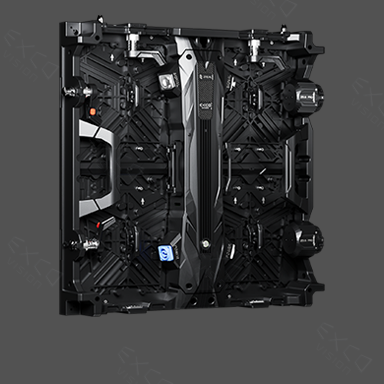
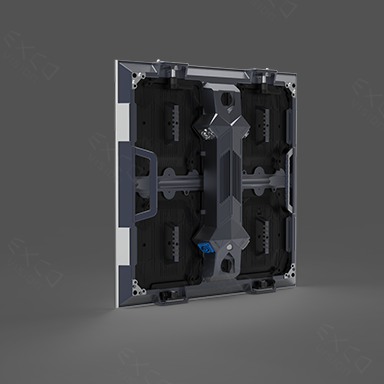
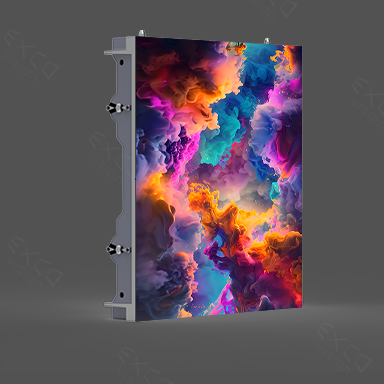
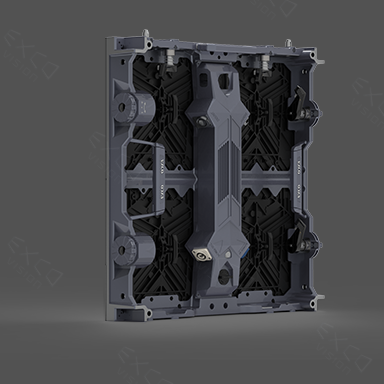
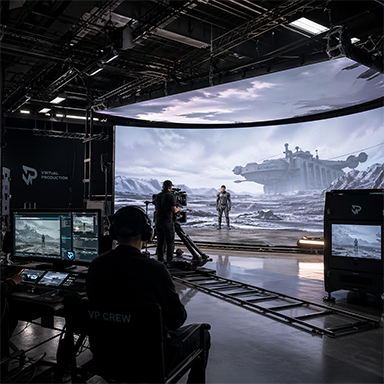
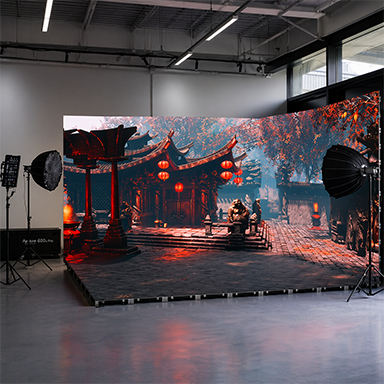
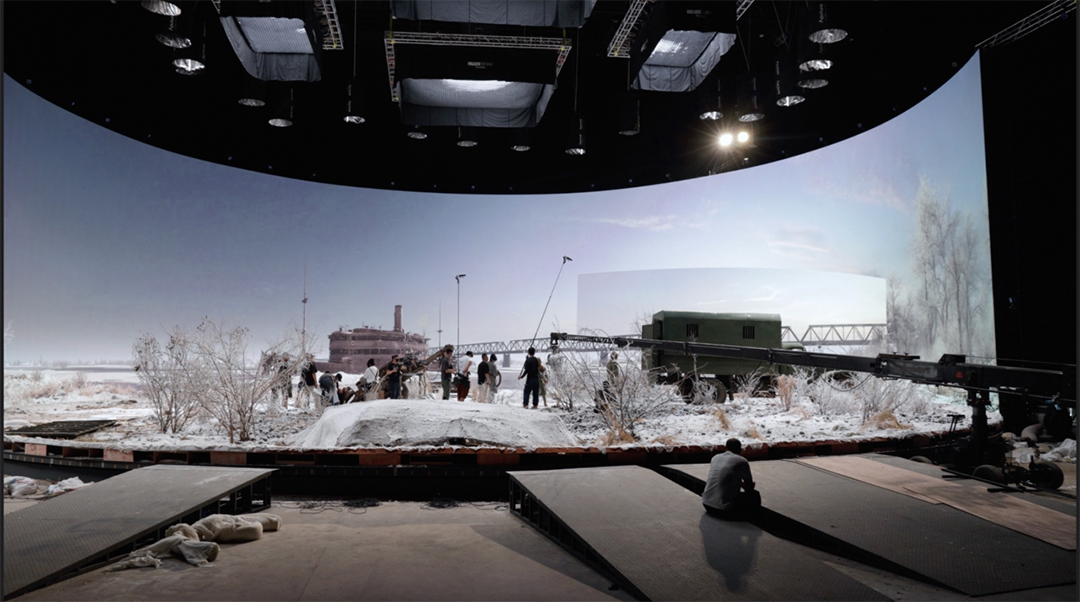
Most original buildings of Unit 731 were destroyed. Based on site scans, historical maps, and old photographs, the crew reconstructed a full-scale 1940s complex in a virtual studio, including main roads, auditoriums, airports, and mining areas. Immersive shooting was achieved using LED circular screens. Digital assets were built to pixel-level precision, with dynamic elements (e.g., birds, smoke) adjustable in real time, ensuring close-up shots held up to scrutiny.
02. Realization of Off-Season and High-Risk Scenes
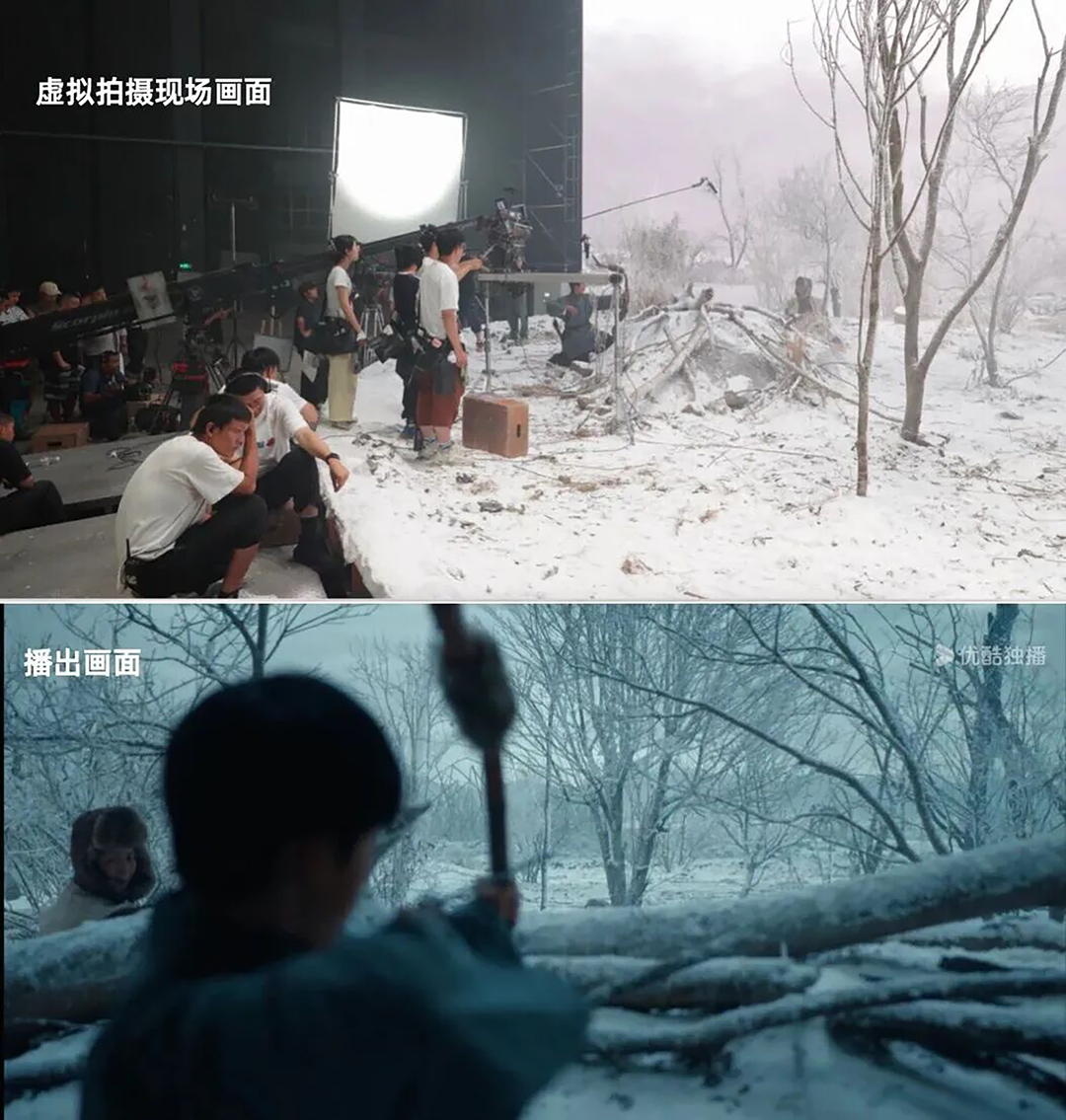
While digital assets of the Unit 731 internal complex revived lost historical sites, the Songhua River bank and northeastern forest digital assets enabled efficient "winter scenes shot in summer" and complex high-risk shooting.
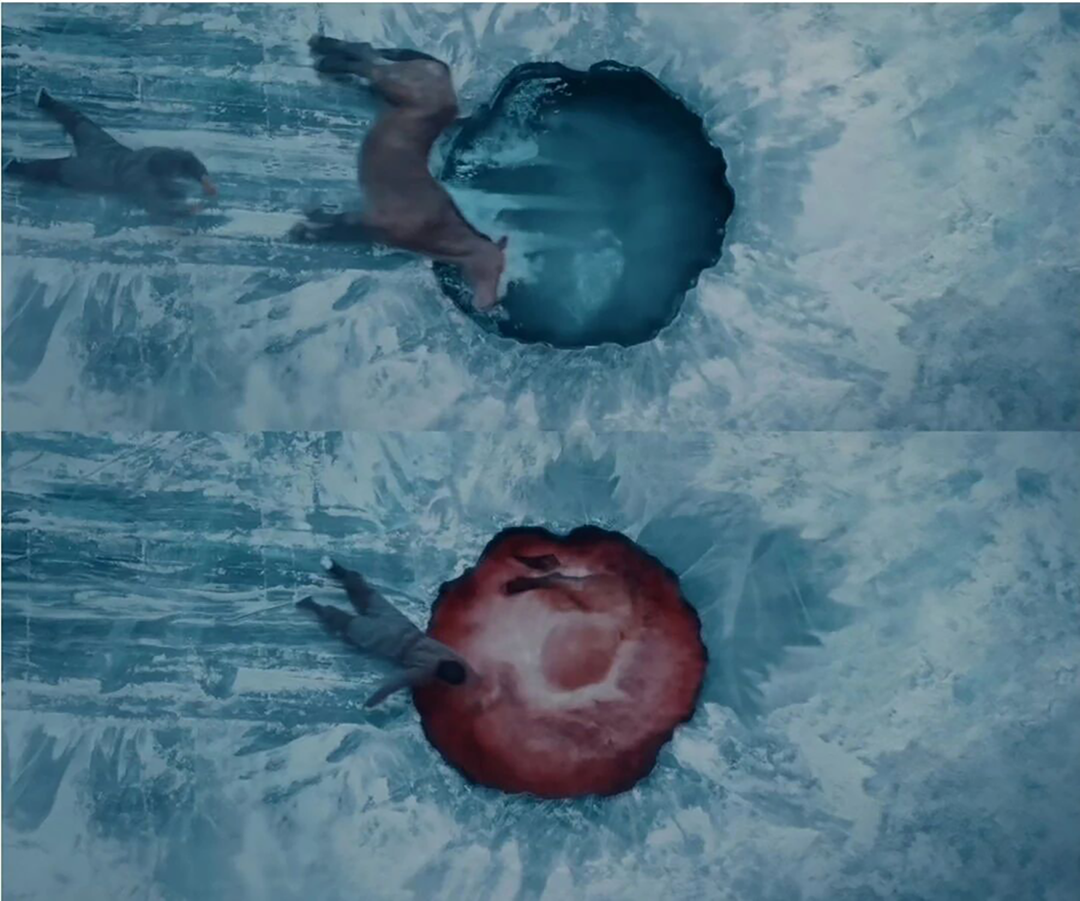
Winter scenes in summer: The crew filmed ice scenes on the Songhua River in summer using virtual production. For instance, the iconic dream sequence of "Tong Changfu falling through the ice" was shot by combining the Songhua River bank digital assets with wire work and a real water tank, simulating ice cracking in the studio and eliminating on-location safety risks.
- High-risk action scenes: Actors performed falls through ice and other risky acts in a safe environment, with dynamic backgrounds synced on LED screens to enhance immersion.
In the first episode of Man's Inhumanity to Man, the highly acclaimed iconic scene—the dream sequence in which Changfu falls into an ice crevice together with his horse—was also shot using virtual production technology with this set of digital assets.
Shooting this scene on location would have posed severe safety risks to the cast. Green‑screen studio shooting would have not only meant a huge post‑production VFX workload but also posed significant challenges to the actors’ sense of immersion and conviction.
Virtual production provides us with a tool that transcends physical reality to reach psychological truth. The actor is engulfed by a complete, enveloping time and space. Their performance is completely safe, yet the sense of crisis conveyed is 100% authentic. This sense of security in turn inspires the actor to deliver a more intense and dedicated performance, offering the audience an immersive experience as if they were on the actual site.
Before this, virtual production was mostly used for relatively static scenes. The ice scenes in Man's Inhumanity to Man marked a pioneering innovation in China.
03. Efficient Scheduling of Complex Scenes
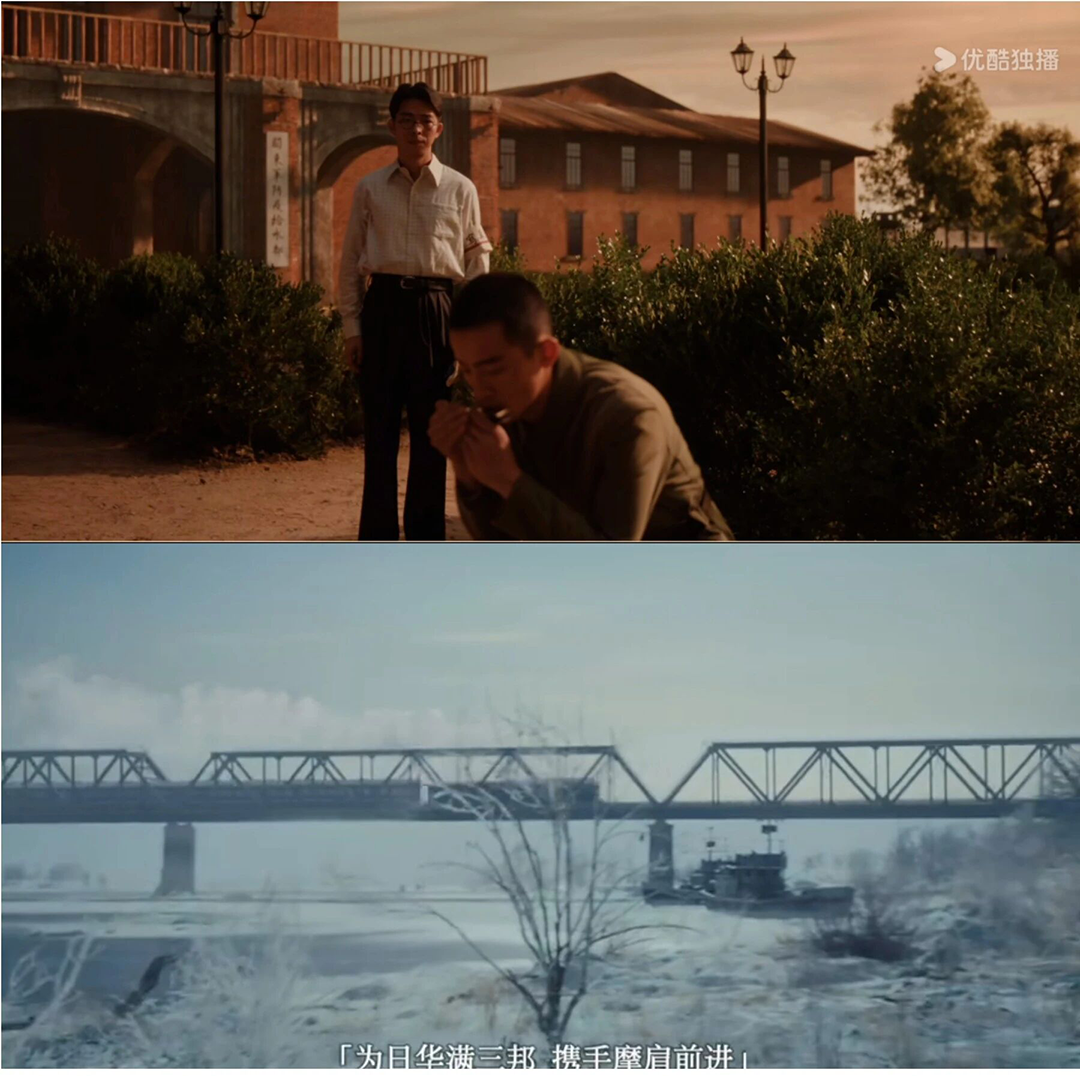
The crew designed 4 digital asset packages (covering 6 main settings), enabling rapid switching between different temporal and spatial scenes (e.g., the Kwantung Army Epidemic Prevention and Water Purification Department, northeastern forests) in the same studio, avoiding time-consuming traditional set transitions.
Tehnoogical and Production Breakthroughs
Man's Inhumanity to Man achieved multiple breakthroughs by integrating the "Flagship Film Production Vehicle" with virtual production for the first time. The system integrated director monitoring, multi-camera playback, real-time VFX compositing, and supported 5G remote collaboration. The retractable vehicle eliminated equipment disassembly during transitions, boosting transition efficiency by 50%. Compared with pure location shooting, virtual production shortened pre-production set construction by at least one month and post-production VFX by another month. Five days of virtual shooting replaced two months of traditional set building, and post-production VFX was saved by 20 days. The entire series was completed in just 7 months (filming began in May 2025, broadcast in December 2025). Overall, the crew only spent a few days shooting in the virtual studio, yet the technology saved the project millions in total costs.
Virtual production not only brings creative visions to life but also provides certainty and order for crews, enabling leaner teams and higher efficiency. It has lowered adoption barriers, allowing more filmmakers to embrace new technology with minimal trial costs, and powering a new engine for the industrialization of the film and television industry.
EXCO VISION: A Pioneer in Virtual Production (VP)
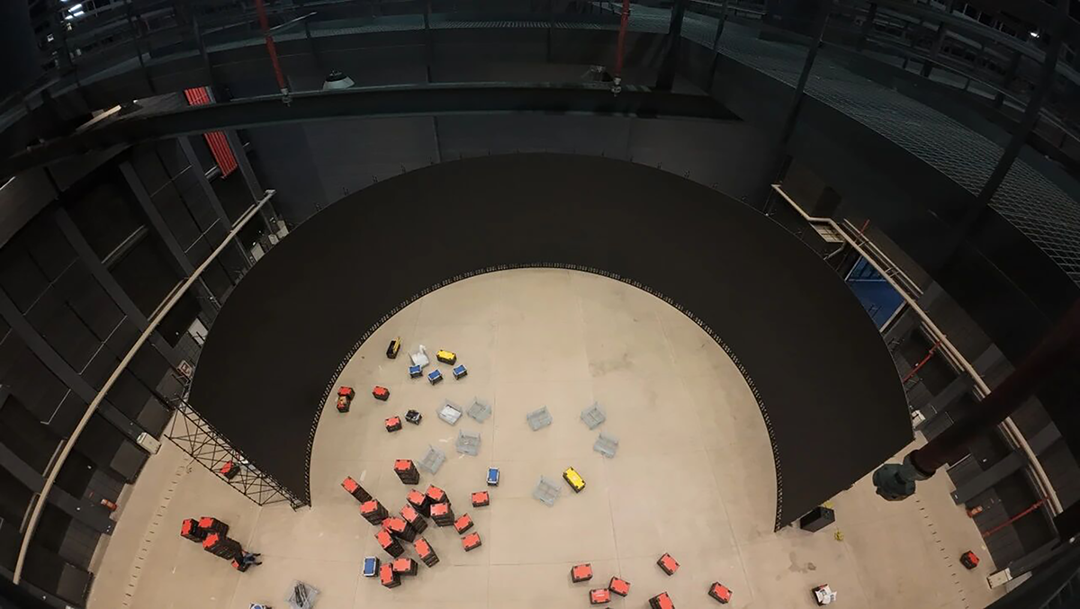
Engineers Xia Xin, Wang Jianwei, and Rao Xinghai provided full on-site technical support.
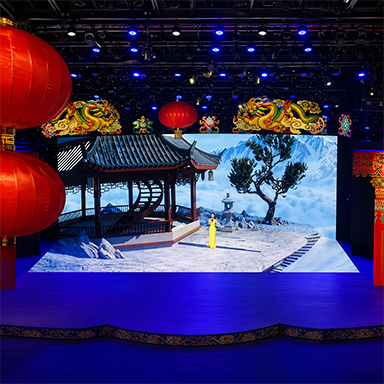
As a pioneer in VP, EXCO VISION has previously contributed to virtual production scenes for The Mystery of the Along the River During the Qingming Festival, The Seven Roots, A Mortal's Journey to Immortality, Splendid Youth, and more. This time, it once again empowered Man's Inhumanity to Man, revealing the true nature of atrocities and ensuring that crimes are not blurred or distorted by time. It reminds us that no matter how time passes, truth will never be buried and justice will never be absent. It further confirms the importance of VP in film and television creation: it breaks the spatial and temporal constraints of on-location shooting, efficiently restores scenes of different eras and regions, and delivers delicate visual presentation to solidify storytelling and character development.
Through the oppressive atmosphere created by VP, along with lighting design and psychological thriller pacing, Man's Inhumanity to Man strikes a balance between historical authenticity and artistic creation.










Get in touch
Leader in professional high-definition visual system application solutions for film and television industry





 0086-0756-22223167
  info@excovision.com

